The One-Woman Waiting Room: What Happens When You're the Only One Showing Up for Your Own Health
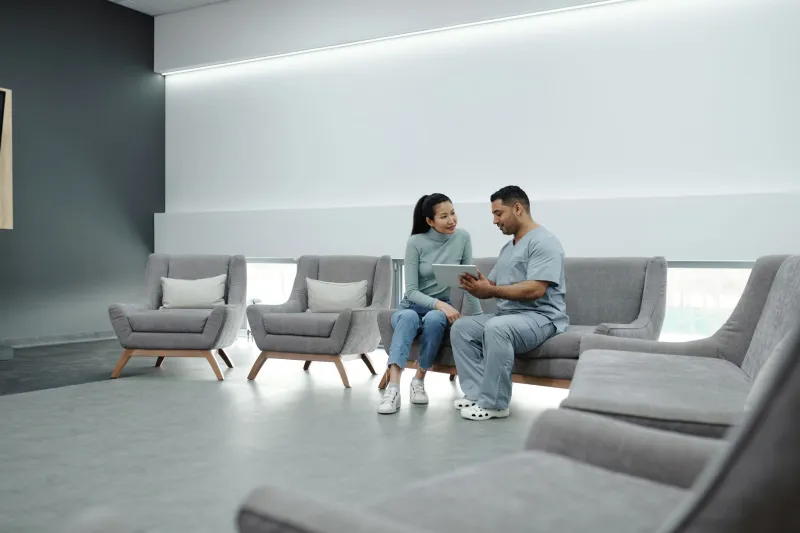
The paper on the exam table crinkles as you shift your weight. The doctor just said the word 'biopsy,' and your brain is spinning through a dozen follow-up questions. You nod, sign the form, schedule the date—and then you walk out to your car alone, phone in hand, wondering who to call first.
If that scene feels familiar, you're in enormous company. A growing number of American women are navigating their most vulnerable medical moments—Pap smears, fertility workups, abnormal results, mastectomy consultations—without a single person in the waiting room holding their purse and their fear at the same time.
The Math of Modern Solitude
The reasons are less dramatic than they sound and more common than we admit. Friends are spread across time zones. Sisters are managing their own kids' pediatric appointments. Partners can't always get the time off—or, in some cases, aren't in the picture at all. The average American woman now marries later, has fewer nearby relatives, and moves more often for work than any generation before her.
Add in the sheer scheduling burden of women's healthcare—appointments that take half a day, referrals that take three months, results that arrive by portal message at 2 p.m. on a Tuesday—and it's no wonder many women stop asking anyone to come along. It's easier to just handle it.
But 'handling it' has a cost, and it's worth naming.
When You're the Patient and the Advocate
Here's what nobody tells you about going solo: it changes the conversation in the room. When there's no second set of ears, women consistently report asking fewer questions, agreeing to timelines they didn't fully understand, and remembering only fragments of what was said.
Dr. Karen Scott, an OB-GYN in Chicago, puts it plainly: 'The patients who do best are the ones who arrive with a plan. A companion is great, but a plan is better. The two most underused tools in my exam room are a notes app and a second appointment.'
That's the reframe more women are embracing: if no one's coming with you, you don't lower the bar for your care—you restructure it.
The Solo Patient's Playbook
Women who've become fluent in flying solo describe a few non-negotiables:
- Record the visit or bring a script. Most states allow patients to record their own appointments with provider consent, and even a voice memo of your questions keeps you anchored. Write your top three questions down before you arrive. Nerves erase memory.
- Book the follow-up before you leave. Solo patients are far more likely to let confusing results sit in a portal inbox. Don't leave the office without your next step on the calendar.
- Outsource the second set of ears. Telehealth second-opinion services, hospital patient advocates, and even a friend on speakerphone for the five-minute results call can stand in where a physical companion can't.
- Say the scary sentence out loud. 'I'm here alone today, so I need you to slow down' is a complete sentence, and it works. Providers respond to it more often than not.
What the Silence Says About Us
There's a bigger story here, too—one about how thin the scaffolding around adult women's lives has become. We've written before about the quiet crisis of women losing their close friendships in midlife. The empty waiting room is where that statistic gets a face.
And yet, plenty of women describe something more complicated than loneliness in that chair: a fierce, hard-won competence. The woman who has scheduled her own colonoscopy, driven herself to her own D&C, and read her own pathology report is not fragile. She is, quite often, the most medically literate person in her circle.
The goal isn't to shame women for being alone or to pretend solitude is secretly empowering. It's neither tragedy nor triumph—it's just the terrain. And terrain can be prepared for.
Nobody Rides Alone (Even When They Do)
The last word goes to the women themselves. In online communities from Reddit's health forums to Facebook groups for endometriosis patients, a quiet mutual-aid culture is forming: women trading appointment checklists, offering to be on the phone during results calls, translating doctor-speak in real time.
That's the 'now' part of this story. The waiting room may be emptier than it used to be, but the waiting room isn't the only place support can live. Sometimes it lives in a group chat, a shared Google Doc of questions, a friend two thousand miles away who answers on the first ring.
You may be the only one in the exam room. You don't have to be the only one in your corner.