Rest Is Not a Reward: Women Are Dismantling the Cult of Constant Productivity

Somewhere along the way, being exhausted became a personality trait. Your calendar was your worth. Your side hustle was your identity. And if you weren't optimizing, monetizing, or at the very minimum reflecting on your growth journey, you were falling behind.
Women, in particular, got sold this story hard. Hustle culture didn't just ask them to work—it asked them to perform working. To post about the 5 a.m. wake-up calls, the vision boards, the Notion dashboards color-coded by life category. To treat every spare hour as a resource to be allocated rather than a moment to actually live inside of.
And now? A growing number of women are done with all of it. Not quietly done, either. Loudly, deliberately, unapologetically done.
The Grind Was Never Neutral
Here's the thing nobody said out loud for a long time: productivity culture has always extracted the most from the people who could afford to give the least. Women—especially Black women, women of color, and working-class women—were already carrying invisible loads before the hustle gospel told them to add a Etsy shop on top of it.
The message was framed as liberation. Be your own boss. Turn your passion into profit. You have the same 24 hours as Beyoncé. But what it actually did was take the pressure that capitalism had always placed on women's time and rebrand it as personal ambition. The exploitation didn't disappear. It just got a better Instagram aesthetic.
Dr. Devon Price, a social psychologist and author of Laziness Does Not Exist, has argued for years that the belief in laziness—the idea that people who aren't constantly producing are somehow morally failing—is a cultural myth that serves institutions, not individuals. When women internalize that myth, they don't just work more. They feel guilty for resting. They apologize for having needs. They treat their own exhaustion as a character flaw.
That psychological toll is real, and it's been quietly devastating.
When Optimization Becomes Its Own Full-Time Job
Ask any woman who went deep into the productivity rabbit hole and she'll tell you the same thing: at some point, managing the system for getting things done started taking more energy than the things themselves.
She was journaling about her goals, tracking her habits, listening to podcasts about deep work during her commute, and reading newsletters about inbox zero—all in service of a version of herself that was perpetually just out of reach. The goalposts for "enough" kept moving. Hit one milestone and the algorithm served up someone doing it bigger, faster, with a better morning routine.
Marcella, a 34-year-old marketing manager in Atlanta, describes it this way: "I had a whole color-coded system, a second phone for my side business, and a recurring reminder to 'audit my energy.' I was so busy optimizing my life that I wasn't actually living it. I hadn't read a novel for pleasure in three years."
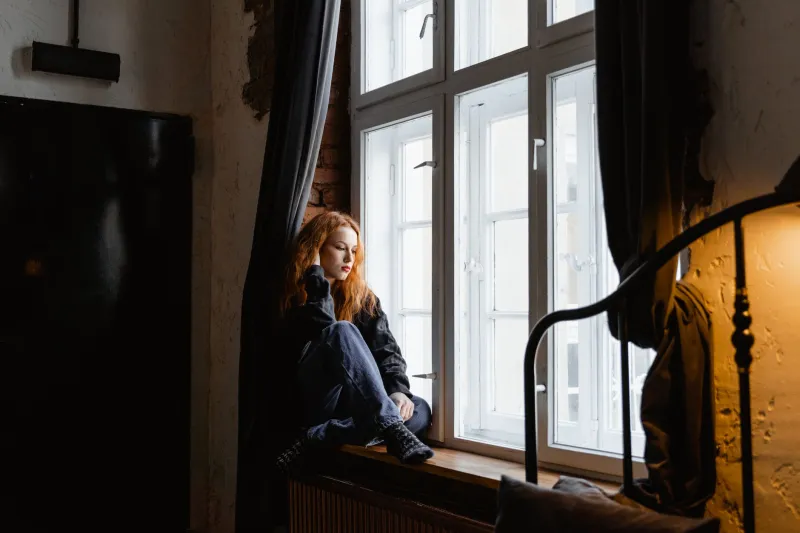
She quit the side hustle eighteen months ago. She now has what she calls "useless Saturdays"—days with no agenda, no errands batched for efficiency, no content to create. "I felt guilty for about two months," she says. "Then I felt human again."
The Side Hustle Trap
The side hustle, specifically, deserves its own reckoning. What started as legitimate financial survival strategy for women navigating stagnant wages and economic precarity got repackaged by influencer culture into a moral imperative. Don't just have a job—have a brand. Don't just have a hobby—have a revenue stream.
The problem is that when everything becomes a potential income source, nothing gets to just be yours anymore. Your knitting becomes a shop. Your cooking becomes a food blog. Your expertise becomes a course you're always almost ready to launch. Women lose the last corners of their lives that belonged only to them—and then wonder why they feel so hollow.
Jasmine, 29, a nurse in Chicago who briefly ran a natural hair care side business, put it plainly: "I loved doing my own hair. It was the one thing that was just for me. Then I turned it into a business and suddenly I hated it. It took two years to enjoy it again after I shut the shop down."
The hustle culture machine is particularly insidious because it positions the burnout it creates as your failure to manage yourself better. You didn't need a break—you needed a better productivity system. You didn't need rest—you needed to find your why.
Choosing Slowness as a Political Act
The women pushing back aren't just taking naps. They're making an ideological choice.
The slow living movement, which has been gaining traction across social media in ways that feel genuinely countercultural rather than aesthetic, is populated largely by women who have consciously decided that their time is not a commodity to be maximized. They're gardening without filming it. Reading without reviewing it. Cooking without making it content. Being bored—actually, genuinely bored—without immediately reaching for their phones.
Boredom, it turns out, is not the enemy. Research from the University of Central Lancashire found that boredom can actually fuel creativity and self-reflection. Your brain needs unstructured time to consolidate memory, process emotion, and generate original thought. The constant input of hustle culture—the podcasts, the newsletters, the self-improvement content—doesn't just fill your time. It colonizes the mental space where your actual self gets to exist.
Rejecting that isn't laziness. It's reclamation.
What You're Actually Owed
Here's the reframe that more women are arriving at, sometimes slowly and sometimes all at once after a breakdown in a Target parking lot: you do not have to earn your rest. You do not have to justify your stillness. You are not a productivity unit with feelings attached.
The culture that told you otherwise was not trying to free you. It was trying to extract more from you while making you feel grateful for the opportunity.
That doesn't mean ambition is bad or that working hard is inherently a trap. It means the story that your value is tied to your output—that you are only as worthy as your most recent achievement, your most recent launch, your most recent hustle—is a lie that has cost women enormously.
And the antidote isn't another system. It's not a better boundary-setting framework or a morning routine that finally sticks. It's something simpler and more radical: permission. Permission to have a Tuesday evening that produces absolutely nothing. Permission to have a skill you never monetize. Permission to be tired and rest instead of pushing through. Permission to be a whole person rather than an optimized one.
Marcella says it best: "I used to think I was wasting time. Now I think I was wasting myself. There's a difference."
There is. And more women are figuring that out—one gloriously unproductive afternoon at a time.