Where Did My Girls Go? The Quiet Crisis of Women Losing Each Other in Adulthood
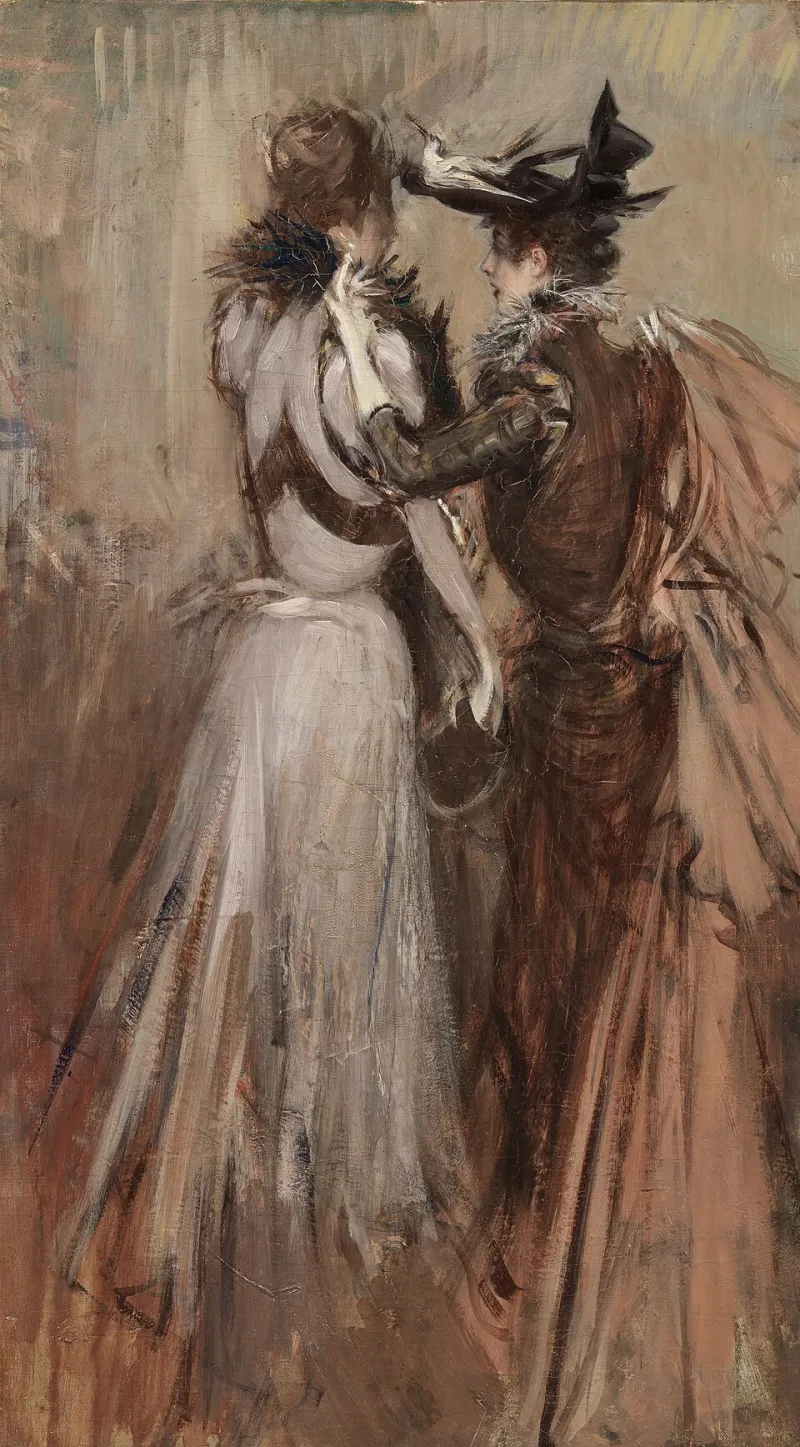
Photo: Giovanni Boldini, Public domain, via Wikimedia Commons
Something strange happens to female friendships in your thirties. The group chats go quiet, the standing dinner dates evaporate, and suddenly you're realizing you haven't had a real conversation with your best friend in four months. You text "we need to catch up!!" with two exclamation points, she responds with a string of heart emojis, and then — nothing. The calendar stays empty. Another month slides by.
This isn't a personal failing. It's a pattern so widespread that researchers have started calling it the friendship recession, and women are bearing the brunt of it in ways that are quietly devastating.
The Numbers Don't Lie
A 2021 Survey Center on American Life report found that the percentage of Americans who say they have no close friends has quadrupled since 1990. For women specifically, the data is sobering: the share reporting having ten or more close friends dropped from 36% in 1990 to just 24% in recent years. We are, statistically speaking, lonelier than our mothers were — and far lonelier than we expected to be at this stage of our lives.
What's fueling this? It's not one thing. It's everything hitting at once.
Career ambition pulls women in one direction. Motherhood — for those who choose it — pulls in another. Partnerships demand time. Financial pressure means side gigs eat up evenings. And somewhere in the middle of all that optimizing and hustling and doing, the friendships that once felt as essential as oxygen start to feel like a luxury we can't quite afford.
"I kept telling myself I'd make more time once things calmed down," says Renata, 34, a project manager in Chicago. "But things never calmed down. And one day I looked up and the friendships I thought were permanent had just... faded. No fight, no drama. Just distance."
The Guilt Loop Nobody Talks About
Here's the part that makes the friendship recession particularly cruel: most women feel terrible about it. There's a specific guilt that comes with being the one who cancels, who forgets to follow up, who shows up six months late to a hard conversation. And that guilt — instead of motivating reconnection — often makes avoidance feel easier.
Social psychologist Dr. Marisa Franco, author of Platonic, has written extensively about how adult friendships suffer from what she calls "the vulnerability paradox." We want closeness, but initiating it feels risky. We're afraid of seeming needy, of being rejected, of admitting we're lonely in a culture that treats busy-ness as a badge of honor.
For women especially, that fear is layered with something else: the sense that our friendships should be effortless and eternal, the way they were at 22. When they're not, we assume we've done something wrong rather than recognizing that adult life has changed the conditions, not the connection.
The Motherhood Divide
If there's one fault line that fractures female friendships more than any other, it's the one between women who have kids and women who don't — or who aren't there yet. It's a divide that both sides often feel but rarely name out loud.
Moms describe the isolation of postpartum life, of losing the version of themselves their childless friends knew, of needing support that requires showing up in inconvenient, unglamorous ways. Meanwhile, women without kids describe feeling like they've been quietly deprioritized, invited less, understood less.
"I don't blame my friends who became mothers," says Deja, 37, a teacher in Atlanta. "But I'd be lying if I said it didn't hurt when the dynamic shifted so completely. It felt like I'd been replaced by a version of her life I wasn't part of."
Neither side is wrong. Both are grieving a friendship that worked differently when life was more parallel. The question is whether women are willing to do the harder work of loving each other across difference — and that starts with actually saying this stuff out loud.
What Rebuilding Actually Looks Like
Here's the good news: the friendship recession is reversible. But it requires something that doesn't come naturally to most high-achieving women — letting go of the idea that a good friendship has to look a certain way.
Lower the bar for initiation. You don't need a two-hour dinner to maintain a friendship. A voice memo. A meme that made you think of her. A "I saw this and thought of you" text. Micro-moments of connection, repeated consistently, do more work than a twice-yearly catch-up ever could.
Name the drift directly. It feels awkward, but it works. "Hey, I feel like we've been ships in the night lately and I miss you" is a sentence that has saved more friendships than any amount of passive hoping. Women are generally better at emotional directness than we give ourselves credit for — we just need permission to use it on our friends.
Ritualize what matters to you. The friendships that survive adulthood tend to have built-in structure: a standing monthly dinner, a yearly trip, a book club that's really just an excuse to drink wine and talk. Relying on spontaneity in adulthood is a recipe for perpetual postponement.
Make peace with evolution. Some friendships are meant to be seasonal. Not every connection from your twenties is supposed to follow you into your forties, and releasing that expectation with grace — rather than guilt — is its own kind of emotional maturity.
We Deserve More Than Managed Loneliness
There's a version of this story that ends with a productivity-style checklist: schedule friend time like a meeting, treat connection like a KPI. And look, if that's what it takes, fine. But the deeper truth is that women have been so thoroughly trained to deprioritize their own emotional needs — to give to partners, children, employers, everyone — that friendship has become something we squeeze in rather than something we protect.
The friendship recession isn't just a scheduling problem. It's a values problem. It's the result of a culture that has never fully counted women's relationships as real, important, load-bearing structures in a life well lived.
They are. You know they are. You felt it the last time a friend really got it — got you — in a way no one else does.
So text her back. Not with the heart emojis. With an actual date.