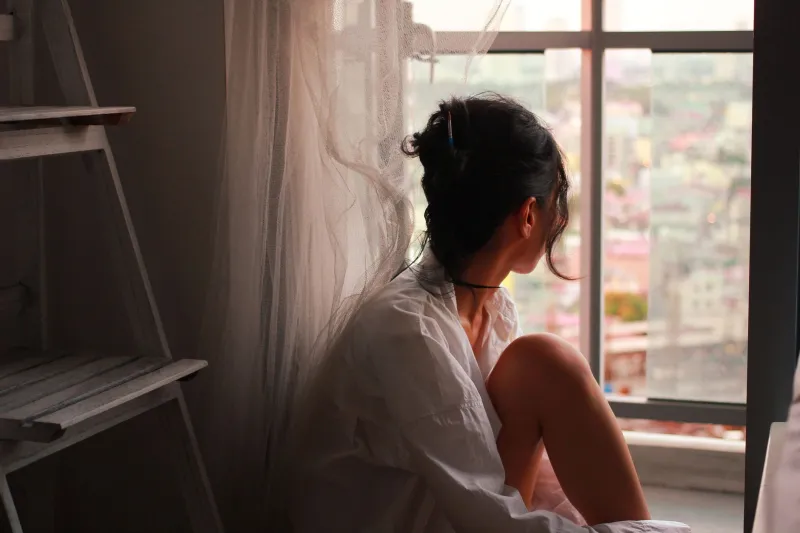
Step Into the Shot: The Middle-Aged Women Refusing to Vanish From Their Own Memories

Ask around at any given birthday party, graduation, or Thanksgiving table and you'll hear the same confession, delivered with a shrug: I'm never in the pictures.
For decades, this was framed as a quirk. A preference. Something women said the way they said "oh, no, I couldn't" when offered the last slice of pie. But dig a little deeper and the pattern stops looking like humility and starts looking like erasure—self-imposed, certainly, but shaped by a culture that spent decades teaching women their visual peak has an expiration date.
Now something is shifting. Women in their 40s, 50s, and beyond are demanding to be back in the frame—literally. And the ripple effects go well beyond the camera roll.
The Disappearing Act
Psychologist Dr. Renata Alvarez, who studies body image and aging at a Boston-area practice, says the pattern is so consistent it's practically a diagnostic marker of midlife.
"Somewhere around 40, many women start editing themselves out of documentation," she explains. "They decline the group photo. They crop themselves out. They take the picture so nobody has to take it of them. It feels like control, but what it actually produces is absence."
The reasons stack up like layers: weight gain the woman hasn't made peace with, gray roots, wrinkles she's been told to fix, a divorce that left her feeling like a ghost of her former documented self. Add in a youth spent under the unforgiving lens of tagged photos and social media, and opting out starts to feel like mercy.
But there's a cost, and it compounds. "I've had clients in their 60s realize they have almost no photos of themselves from the last twenty years," Alvarez says. "Their kids have albums full of everyone else. And there's real grief in that. They've edited themselves out of their own family history."
The Photographer Who Saw It Coming
Atlanta-based portrait photographer Marisol Deng noticed the trend from the other side of the lens. For years, her booking calendar told the story: women in their 20s and 30s booked boudoir and personal branding sessions constantly. Women over 45? Almost never—unless a daughter dragged them in for Mother's Day.
Then, around 2022, the phone started ringing differently.
"Women were calling and saying things like, 'I've decided I'm done being invisible,'" Deng recalls. "One client told me, 'My mother died last year and we barely have ten photos of her past age 50. I refuse to do that to my daughter.'"
Deng now runs a growing practice focused almost entirely on women 40 and up, and her approach is less about glamour and more about witness. "I'm not erasing their age. I'm documenting their presence. That's the assignment."
Who Gets Remembered
Event planner Corinne Baptiste, who produces milestone celebrations across the Chicago suburbs, has developed an unofficial rule at her events: every woman gets photographed, whether she likes it or not.
"I watch it at every party. The men line up for photos. The young women pose. The women in their 50s are behind the camera, in the kitchen, refilling the drinks," Baptiste says. "So now I build it into the run of show. We do a 'her era' photo moment. No excuses, no 'let me fix my hair first.'"
She laughs, but she's not joking. "These women planned the whole event. Paid for the catering. Held everyone together. And then they'd have nothing to show they were even there. Not on my watch."
What's Really Behind the Comeback
The reframe isn't happening in a vacuum. It tracks with broader shifts: the rise of midlife influencers unapologetically posting their real faces, celebrity women aging on their own terms in public, and a wellness culture slowly (imperfectly) loosening its grip on the idea that a woman's value peaks at 29.
There's also a generational reckoning at play. Many women now in midlife watched their own mothers vanish from photos—and they're not interested in repeating it.
"My mom was always the one holding the camera," says Dana Whitfield, 47, a nurse practitioner from Columbus, Ohio, who recently did her first professional portrait session. "When she passed, we found maybe three photos of her as an adult that weren't blurry or half-cropped. I have a teenage daughter now, and I want her to look back and see me. All of me. The laugh lines included."
Being Seen Is a Practice
Alvarez is quick to note that getting back in the frame isn't about vanity—it's about authorship. "When women refuse to be photographed, they're often making a pre-emptive strike against judgment. But the judgment rarely comes from where we expect. It comes from us."
Her advice is almost boringly practical: let someone else take the picture. Don't inspect and delete on the spot. Sit with the image before deciding it's unacceptable. "Visibility is a muscle," she says. "You build it by showing up."
Deng puts it more plainly. "The camera isn't the enemy. The story you've been told about who deserves to be in the picture—that's the enemy. And honestly? These women are rewriting it one shot at a time."
The next family gathering, the next girls' trip, the next ordinary Tuesday—somewhere a woman in her 50s is about to hand over the camera instead of picking it up. It's a small act. It's also, increasingly, a statement: I was here. Put me in the frame.